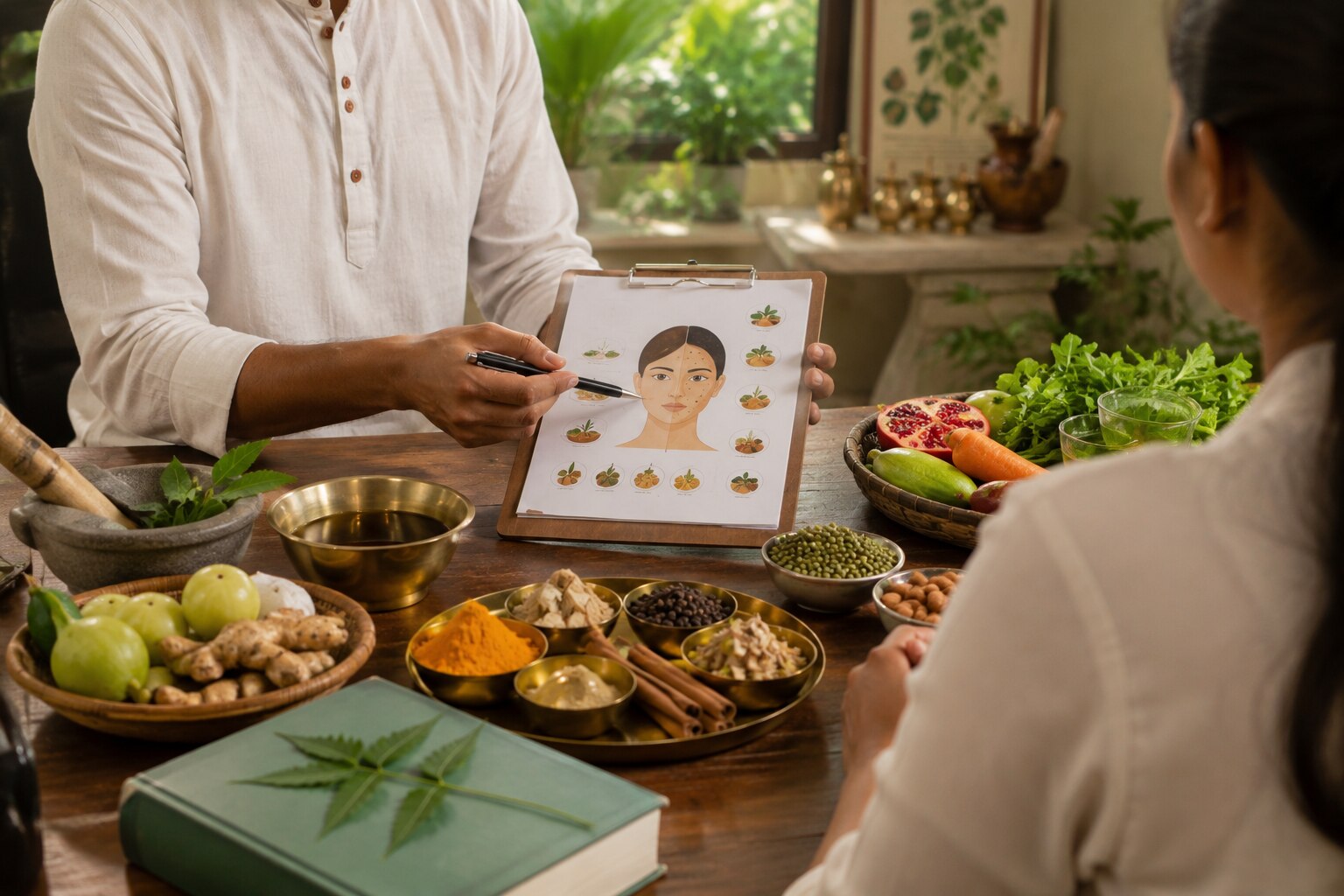
Skin changes can reflect many influences at once: food patterns, digestion, hormones, allergies, skincare products, medication and genetics. By the end, you will know how Ayurvedic concepts connect food with skin tissue, how to build ordinary Indian meals without following a rigid dosha diet, and how to test suspected triggers without replacing necessary medical care.
Key takeaways
- Link skin changes to digestion and tissue nourishment, not one food alone.
- Match meal choices to your skin’s dryness, oiliness, irritation, or inflammation.
- Test one suspected trigger at a time before removing whole food groups.
- Use diet to support prescribed treatment, not replace diagnosis or medical care.
How Ayurveda connects food with skin tissue
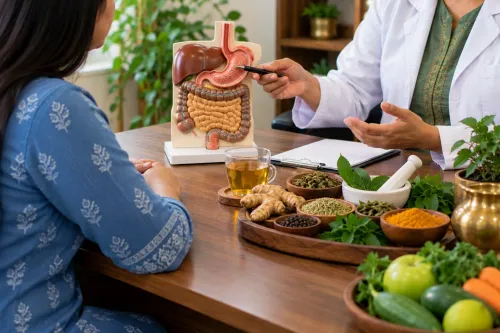
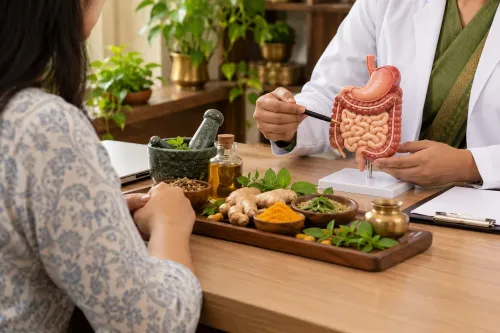
In Ayurveda, food reaches the skin through digestion and tissue nourishment, not through a simple one-food-to-one-rash pathway. Agni, the digestive and metabolic fire, processes what you eat and makes nutrients available for the body’s tissues.
When digestion is weak or irregular, Ayurveda describes the formation of Ama, an incompletely processed residue associated with heaviness, coating, congestion or other signs of impaired balance.
The first nourishing tissue is rasa dhatu, the fluid nutritive tissue that supports hydration and circulation. Nourishment then progresses to rakta dhatu, the blood tissue closely linked in Ayurvedic practice with skin colour, warmth, sensitivity and inflammatory changes.
If these tissues receive poor nourishment, or if waste is not cleared effectively, the skin may appear dry, dull, irritated or congested.
Doshas shape how this pathway presents. Vata disturbance is considered when dryness and roughness dominate; Pitta when heat, redness or burning appear; Kapha when oiliness, heaviness or blocked pores are prominent. These are traditional interpretations, not proven biomedical mechanisms.
Food advice therefore depends on your constitution, digestion, season, skin pattern and treatment stage rather than a universal skin diet.
Match the eating pattern to the skin presentation
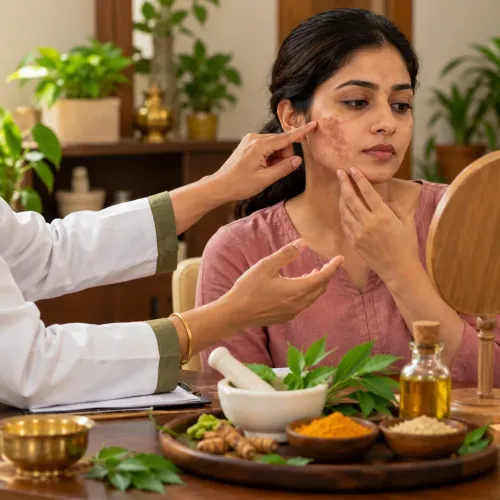
A dry, itchy face calls for a different dietary approach from an oily, congested one. Ayurveda interprets the presentation alongside constitution, digestion, season and treatment stage; Vata, Pitta and Kapha are patterns to assess, not labels to assign from appearance alone.
| Pattern | Skin presentation | Dietary emphasis |
|---|---|---|
| Vata | Vata skin tends toward dryness, roughness, flaking, tightness and sensitivity. | Choose regular meals, warm cooked foods, soups, porridges, healthy fats and adequate fluids. Limit erratic meal timing, very dry snacks and excess caffeine. |
| Pitta | Pitta skin tends toward redness, heat, burning, tenderness, rashes or inflamed breakouts. | Reduce very spicy, sour and salty foods, alcohol and frequent fried meals. Favor milder, hydrating foods and stop foods that reliably increase flushing. |
| Kapha | Kapha skin tends toward oiliness, congestion, sluggish-looking texture and blocked pores. | Emphasize lighter portions, warm vegetables, legumes and whole grains. Reduce heavy dairy, sugary foods, fried foods and late-night eating. |
This traditional reasoning may include Agni, or digestive capacity, and the effect of food on tissue nourishment; it does not prove that poor digestion causes every rash. Avoid removing several food groups at once: record meals and symptoms, then test one suspected trigger with professional guidance.
Persistent itching, scaling, hives or recurrent eruptions need medical assessment.
Which food categories deserve a closer look
Examine each category for its effect on your symptoms, digestion, appetite and meal pattern—not as a permanent list of forbidden foods. Ayurveda traditionally links excess sour, salty, pungent, heavy or oily foods with skin disturbance, but these are traditional explanations, not proven causes of acne or dermatitis.
| Category | What to examine | What to do |
|---|---|---|
| Dairy | Milk, cheese and creamy foods; note congestion or itching after eating | Test one item at a time rather than removing all dairy |
| Fermented foods | Yogurt, pickles, idli, dosa and vinegar-rich foods; sourness may aggravate heat-sensitive symptoms | Reduce during flushing or burning, then reassess |
| Fried foods | Deep-fried snacks and repeatedly heated oil; they add heavy, oily meals | Compare with steamed, baked or lightly sautéed meals |
| Sugar-heavy foods | Sweets, sweet drinks and refined snacks; a high-glycemic pattern can worsen acne in some people | Reduce portions and track breakouts |
| Spices | Very spicy chilli, pepper and excess pungent seasoning | Lower them when redness or burning dominates |
| Alcohol and caffeine | Alcohol can disrupt sleep and hydration; excess tea or coffee can replace meals | Record intake beside symptoms |
| Packaged snacks | Chips, biscuits and instant foods often combine refined flour, salt, sugar and oils | Swap them for minimally processed food |
| Nutrient-dense whole foods | Fruits, vegetables, whole grains, legumes, nuts and healthy fats provide skin-supporting nutrients | Build meals around variety, not a single “skin-cleansing” food |
Avoid eliminating several groups together; a food-and-symptom diary gives a clearer answer.
Build a practical Indian meal pattern
Set meal timing around digestion rather than constant snacking: eat breakfast after genuine morning hunger, make lunch your largest meal, and finish dinner at least two to three hours before sleep. Ayurveda individualizes portion size and food choices according to appetite, season, constitution and symptoms, so this is a template, not a universal skin diet.
- Morning: Drink water at room temperature or warm, then choose a warm, cooked breakfast such as vegetable poha or lightly spiced oats. Stop at comfortable satisfaction rather than eating until full.
- Midday: Eat the largest portion around 12 to 2 p.m., using cooked vegetables, moong dal, rice or roti, and a small amount of ghee or oil. Favor simmering, steaming or pressure-cooking over deep-frying.
- Between meals: Maintain hydration with water between meals; do not force large volumes during eating. If hungry, choose a small, simple snack instead of grazing on packaged foods.
- Evening: Eat a smaller dinner by 7 to 8 p.m., such as moong khichdi or vegetable soup with a modest grain portion. Serve food warm, not scalding or straight from the refrigerator.
Keep food combinations simple. Avoid stacking several heavy foods in one meal, and do not treat fruit and milk as universally harmful; your digestion and symptoms matter. Reduce late-night eating, sugary drinks and highly refined snacks, which can add a high glycemic load without guaranteeing or preventing acne.
Test a suspected trigger without overrestricting
Do not remove several food groups after one bad skin day. Start a food-and-symptom diary: record ingredients, portion, preparation, meal time, sleep, stress, menstrual stage, products used and skin changes, including their timing and severity.
- Keep the rest of your routine steady during a two- to four-week observation period.
- Change one variable at a time; do not remove dairy, gluten, sugar and spices together.
- Note whether the same food precedes the same symptom on separate occasions.
- If symptoms settle, discuss a planned reintroduction with a clinician rather than avoiding the food indefinitely.
A rapid, repeatable reaction after eating deserves allergy assessment, especially with hives, swelling, vomiting or breathing difficulty. A delayed flare that appears only once is weaker evidence: temporary irritation, stress, infection, a new cosmetic or the natural fluctuation of eczema or acne could explain it.
Do not use food elimination as routine treatment for atopic eczema without a documented allergy, reproducible reaction or clinical reason.
The detox misconception causes further confusion. Purgation, enemas or pañcakarma are not routine “cleanses” for skin, and unsupervised restriction can cause deficiencies. Ayurvedic dietary changes are safer when individualized and monitored.
Know when diet supports treatment rather than replacing it
Keep dietary changes alongside topical skincare and prescribed dermatological treatment when acne, eczema or pigmentation is persistent, painful, spreading or scarring. A lower-glycemic eating pattern may help some people with acne, but it is not a guaranteed treatment; stopping medicine to “let food work” can allow inflammation or scarring to progress.
Arrange medical assessment when:
- A food causes hives, lip or facial swelling, vomiting, wheezing or a rapid flare; these symptoms call for prompt food allergy evaluation, not an indefinite elimination diet.
- Acne begins suddenly, resists treatment, or appears with irregular periods, excess facial hair or scalp hair loss; ask about hormonal or metabolic acne and pigmentation.
- Pigmentation changes quickly, affects body folds, or occurs with unusual thirst, weight change or fatigue; diet alone cannot identify an endocrine or metabolic cause.
AyurBless Clinic can provide useful doctor-led Ayurvedic guidance when you want to test diet without removing several food groups at once. Bring your food-and-symptom record, medication list and recent test results so the clinician can relate meal changes to your symptoms, digestion and treatment stage, while keeping dermatology or allergy care in place.
Avoid unsupervised detoxes, purgation and Ayurvedic products of uncertain composition.
Related service
Ayurvedic Dietary Counseling At AyurBless Clinic, Dr. Abhisha Patil offers specialized Ayurvedic Dietary Counseling designed to align food habits with individual body... View service → |
Frequently asked questions
How does Ayurveda connect food with skin health?
Ayurveda views digestion and Agni as central to processing food and nourishing body tissues, including skin. Skin changes do not usually result from one food through a simple one-to-one pathway.
How should you match your eating pattern to your skin presentation?
Consider the pattern you observe, such as dryness, excess oil, irritation, or inflammation, then adjust meal composition, cooking methods, spice intensity, and hydration rather than following a universal skin diet.
Which food categories deserve closer attention for skin concerns?
Review highly processed foods, excess sugar, fried foods, dairy, spicy meals, and foods linked to your personal symptoms. Track portions and timing before deciding that a category is a trigger.
How can you test a suspected food trigger without overrestricting?
Record meals and symptoms, change one suspected food at a time, and observe the response over a consistent period. Avoid removing several food groups together because you will not know which change mattered.
When should diet support treatment instead of replacing it?
Use dietary changes alongside professional evaluation when symptoms persist, spread, cause pain, or involve infection signs. Do not replace diagnosis or prescribed treatment with food changes alone.